

Complex aircraft win
Why Wing Construction Is So Uniquely Challenging
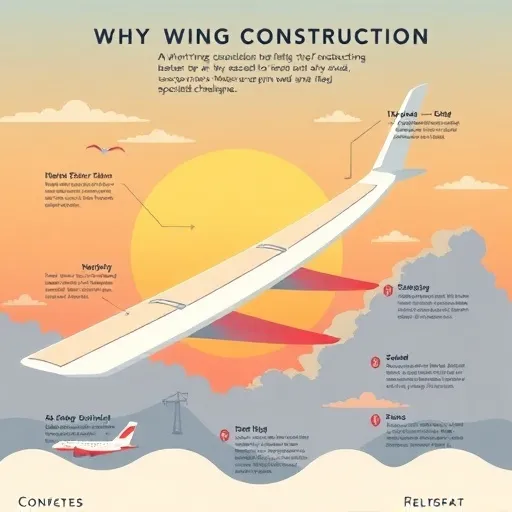
A wing isn't just a flat slab bolted onto a fuselage. It's a wildly complex piece of engineering that has to pull off several brutal jobs all at once — and that's exactly why aircraft wing construction has turned into such a specialized discipline. You can't just weld some metal together and call it a day. Think about what a wing actually has to do: generate lift efficiently across a huge range of airspeeds and altitudes, carry the entire weight of the aircraft in flight, flex and soak up turbulence without cracking or fatigue failure, stay as light as possible for fuel efficiency, and shrug off corrosion, temperature swings, and decades of service life. That's a tall order for any structure — and it's the reason aircraft wing construction sits at the intersection of aerospace engineering, materials science, and precision manufacturing.mobile casino no deposit
The Core Anatomy of a Modern Wing and Its Primary Load-Bearing Components
Before digging into how wings get built, it helps to know what's actually inside one. Most modern commercial aircraft and military aircraft share a similar structural blueprint — and understanding these components is key to grasping why aircraft wing construction is so demanding.US online casino
- Skin: The outer surface you see from the window is usually made from lightweight aluminum alloys or advanced composite materials. It's not cosmetic — the skin carries a big chunk of the wing's bending loads.
- Spars: These long, beam-like structures run from the wing root out toward the wingtip. Think of them as the wing's backbone. Most wings have a front spar and a rear spar forming the primary load-bearing framework.
- Ribs: Perpendicular to the spars, ribs keep the airfoil shape intact and spread loads across the structure. Without them, the wing would deform and lose aerodynamic efficiency.
- Stringers: These run lengthwise and support the skin, stopping it from buckling under compression. Smaller than spars, but critical for stiffness.
- Control surfaces and attachments: Flaps, ailerons, slats, and spoilers get integrated during aircraft wing construction and need pinpoint alignment with the internal structure.
Materials Powering Aircraft Wing Construction in 2026: The Composite Revolution
For decades, aluminum ruled the skies in wing building, and it still matters today. But the biggest shift has been the widespread adoption of composite materials — especially carbon-fiber-reinforced polymers (CFRP). Here's what you'll find in a contemporary wing:
- Aluminum alloys: Still common for ribs, stringers, and some skin panels. Cost-effective, easy to machine, with well-understood fatigue behavior.
- Carbon-fiber composites: Increasingly dominant in wing skins and spars for large aircraft, thanks to killer strength-to-weight ratios and better resistance to fatigue and corrosion.
- Titanium alloys: Used in high-stress zones and where composite-to-metal interfaces need thermal compatibility.
- Thermoplastic composites: An emerging category in 2026 offering faster production cycles and recyclability compared to traditional thermoset composites.
The choice depends on the aircraft's mission, size, production volume, and cost targets. A regional turboprop and a long-haul widebody will have totally different material strategies — and that shapes every decision in aircraft wing construction.
The Step-by-Step Aircraft Wing Construction Process: From CAD Design to Final Assembly
Now let's get into the actual build. Every manufacturer has proprietary techniques, but the general flow of aircraft wing construction follows a recognizable pattern.No Deposit Bonus
1. Design and simulation: Before a single piece of material is cut, the wing gets designed using computer-aided design (CAD) and finite element analysis (FEA). Engineers simulate load scenarios — from normal cruise to extreme gust loads — and optimize accordingly. In 2026, digital twin technology plays a bigger role than ever, creating a virtual replica updated with real-world data to predict maintenance needs and performance over the aircraft's lifetime.
2. Material preparation: For composite wings, this means laying up carbon fiber plies in specific orientations. Automated tape laying (ATL) and automated fiber placement (AFP) machines build up large skin panels with incredible precision, placing thousands of narrow strips at exact angles. For metallic components, raw billets of aluminum or titanium get machined into spars, ribs, and fittings using high-speed CNC equipment.
3. Curing and forming: Composite parts must be cured — typically in large autoclaves under heat and pressure for hours — hardening the resin and bonding layers into a solid structure. Newer out-of-autoclave (OOA) methods are gaining traction in 2026, cutting energy costs and cycle times. Metal parts go through forging, machining, and sometimes chemical milling to shave excess weight.
4. Sub-assembly: Components get joined into larger sub-structures. Spars connect to ribs, stringers attach to skin panels, and fittings get installed at attachment points. This happens in specialized jigs holding everything in precise alignment. Drilling and fastening are critical — every hole must sit within tight tolerances, and fasteners like rivets, bolts, or specialty aerospace fasteners must meet exact specs. Automated drilling systems are now standard, boosting speed and consistency.
5. Final wing assembly: Sub-assemblies come together in a final assembly jig. Upper and lower skin panels mate to the internal framework, and the wing takes full shape. Fuel tank sealing is applied inside the wing box, since most modern aircraft store fuel within the wing structure. Control surfaces get fitted and rigged, and systems routing — hydraulic lines, electrical wiring, and fuel lines — is completed.
6. Testing and quality assurance: No wing leaves the factory without extensive testing, including non-destructive testing (NDT) like ultrasonic inspection and X-ray imaging, pressure testing of fuel tanks, functional testing of moving parts, and dimensional verification using laser tracking and coordinate measuring machines. Some wings undergo static testing and fatigue testing on dedicated rigs, loaded to destruction or cycled millions of times to prove structural integrity.
Automation, Industry 4.0, and Smart Manufacturing in Aircraft Wing Construction
One of the biggest trends in 2026 is the deepening integration of automation and data-driven manufacturing. Smart factories use connected sensors, robotics, and AI-driven analytics to monitor production in real time — catching defects earlier, boosting throughput, and improving traceability. Cobots work alongside human technicians on tasks like sealant application and fastener installation, while augmented reality (AR) systems guide workers through complex assembly steps, cutting errors and training time. All of this matters because aircraft wing construction is a low-volume, high-precision business — no room for mass-production shortcuts.
Key Challenges Facing Aircraft Wing Construction in 2026
- Supply chain complexity: Composite materials, specialty alloys, and precision components come from a global network — disruptions ripple fast.
- Skilled labor shortages: Building wings needs highly trained technicians, and the industry is fighting for talent.
- Sustainability pressure: Manufacturers face growing pressure to cut waste, energy consumption, and carbon emissions.
- Certification timelines: New materials and methods need rigorous regulatory approval, which takes time.
Industry pros are responding with investment in training programs, closed-loop recycling of composites, and closer collaboration with regulators to streamline certification.
What's Next for Aircraft Wing Construction: Thermoplastics, Additive Manufacturing, and Beyond
Looking ahead, several developments will shape the next generation of wings. Expect more thermoplastic composites — faster to process, easier to recycle, and increasingly matching thermoset performance. Additive manufacturing is already flying with 3D-printed titanium and composite fittings, and its use will expand. As materials improve, wings can get thinner and more aerodynamic, further reducing fuel burn. Digital thread integration — seamless data flow from design through manufacturing into service — will become the norm. And hydrogen and hybrid-electric propulsion concepts may require redesigned wing structures to handle different fuel storage and weight distributions. One thing's certain: the wing of 2035 will look and be built differently than today's — and the foundations being laid in 2026 will determine how fast that future arrives.